Most magnet selection advice stops at one line: use neodymium, it is stronger. That line fails as soon as temperature, corrosion or field shape enters the design. A grade that works at 60 °C can lose its flux for good at 150 °C. A magnet that holds indoors for years can crumble in a coastal cabinet.
This guide is about how to choose the right magnet for the applications we quote on most often. Each section names the magnet we would normally specify, and the reason it wins in that application. Links point to the shape pages, where the dimensional detail lives. For the material choice itself, start with neodymium vs ferrite magnets.
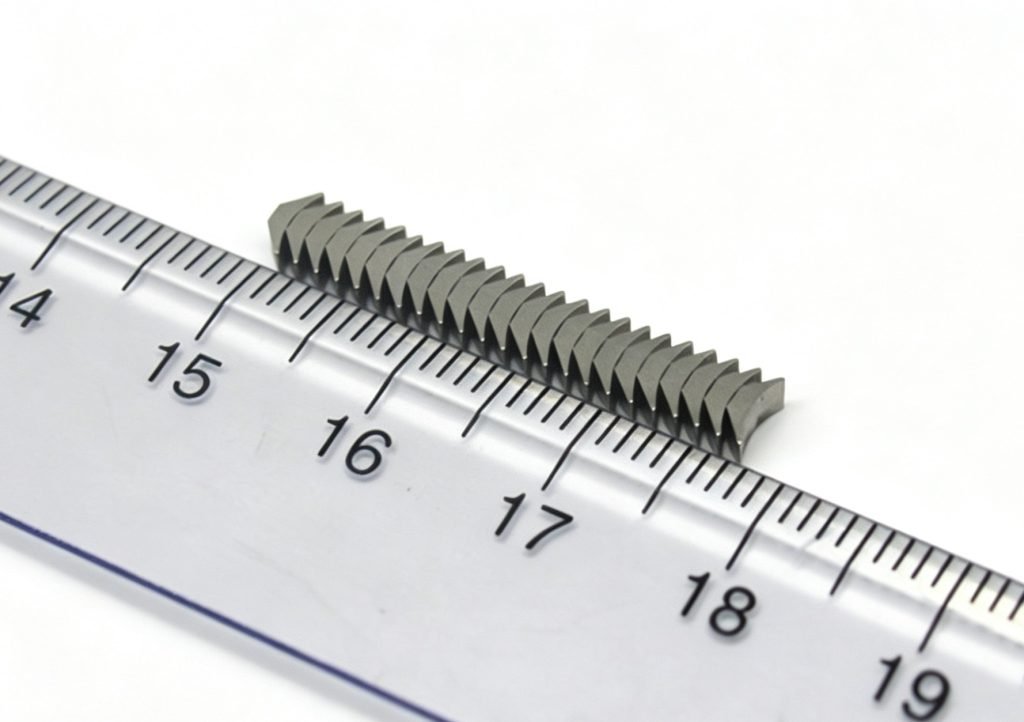
How to Choose the Right Magnet: the Four Variables
Four things settle most designs before a drawing is issued: temperature, reverse field, environment, and the field shape the application needs.
Working temperature. The grade suffix sets the ceiling. A plain N grade tops out near 80 °C. M reaches about 100 °C, H about 120 °C, SH about 150 °C, and UH about 180 °C. Each step adds dysprosium or terbium, and the price follows the step.
Strength falls with heat as well. The reversible coefficient of Br is about −0.11 %/°C for sintered neodymium, so the hot value is easy to estimate:
Br(T) = Br(20 °C) × [1 + α × (T − 20)]
A grade with 1.29 T at room temperature delivers about 1.11 T at 150 °C. That is a loss of roughly 14 percent. Size the magnet on the hot number, not on the datasheet number.
The reverse field. Some applications push a field back through the magnet. Stator current does it in a motor, and an opposing magnet does it in a latch. When the working point drops below the knee of the demagnetization curve, the loss becomes permanent. The knee moves up as the magnet heats, which is why a hot motor needs a higher-coercivity grade than a cold one of the same strength.
The environment. Sintered neodymium corrodes without a coating, because it is roughly two thirds iron by weight. The rare-earth-rich grain boundaries are electrochemically active, so corrosion follows them into the part. Nickel-copper-nickel covers dry indoor parts. Zinc or epoxy suits humid and coastal work. Epoxy and Dacromet hold up under the hood. Parylene and epoxy are the choices where people touch the part, or where it is wiped with solvents. Samarium cobalt resists corrosion on its own and is often used bare. The coating guide compares the coating options.
The field shape. A holding application wants the strongest flux it can get across a gap. A sensor or encoder wants a defined pattern: a set number of poles, evenly spaced, in the right direction. Pole count is limited by the outer diameter, and pole pitch follows from it: π × OD ÷ pole count. Two magnets with the same Br can behave completely differently here.
Automotive & E-Mobility
Under-hood parts combine the two hardest conditions: heat and a strong reverse field. Grades SH and UH carry most of this work.
Traction Motors
Rotor magnets run hot, commonly 120 °C to 180 °C, and they see heavy opposing fields during a current peak. SH to UH grades are the normal starting point. Arc and segment shapes suit both interior and surface permanent magnet rotors. Large solid segments also carry eddy-current losses, so a rotor is often built from several smaller pieces. The coating sits in the rotor gap, so its thickness belongs on the drawing. See arc and segment magnets.
EPS Motors
Electric power steering motors are smaller than traction motors and run cooler, but they still draw high current at parking speed. M and H grades with nickel-copper-nickel plating cover most designs. See motor magnets.
Wheel-Speed Sensors
An active wheel-speed sensor reads a rotating multipole ring. The design driver is pole count and pole pitch rather than peak Br. These rings are typically injection-molded ferrite or injection-bonded neodymium, magnetized with many poles, and coated with epoxy or Parylene against road salt and brake dust. Sintered multipole rings are less common in wheel-speed applications. See sensor magnets.
Seat & Actuator Modules
Seat, mirror and latch motors care more about cost per part than about peak energy. N35 to N42 grades, simple blocks and arcs, and zinc or nickel plating are usually enough.
Consumer Electronics & Audio
Here the constraint is volume and weight rather than temperature. These products are held, worn or carried, so every gram counts.
Speaker Drivers
A ferrite driver is cheaper per unit, but it is heavy and bulky. Neodymium delivers the same flux in a much smaller part, which is why portable and wearable audio almost always uses neodymium. Stationary speakers with space to spare sometimes stay ferrite. See disc and cylinder magnets.
TWS Earbuds & Wearables
Driver magnets are only a few millimeters across, so coating thickness and tolerances account for a large proportion of the finished dimension. Standard builds use N45–N52 grades with nickel-copper-nickel plating. For sweat resistance and repeated wiping, select epoxy or Parylene coatings.
Haptic Actuators
A haptic actuator is tuned around its mechanical resonance, so the magnet has to give a consistent field at a fixed gap. Diametrically magnetized and multipole parts are common. Repeatability matters more than peak Br.
Magnetic Closures
Laptop lids, cases and cabinet doors use small discs and blocks. Nickel-copper-nickel is the default coating. If the magnet will be exposed and subject to sliding contact, select overmolded TPE/TPU magnets to withstand wear. Most laptop and cabinet designs instead enclose the bare magnet within a plastic housing to avoid direct sliding.
Industrial Automation & Robotics
These applications run continuously, often inside a warm cabinet, and many of them have to switch on and off.
Servo & Linear Drives
Continuous duty in an enclosure pushes the choice to H or SH. Where the magnet sits on a rotating axis, the accuracy of the arc face controls cogging, so form and position matter as much as grade. See arc and segment magnets.
Grippers & Magnetic Tooling
A gripper that has to release its part uses an electro-permanent assembly. A low-coercivity material and a high-coercivity material share one magnetic circuit, and a current pulse reverses one of them to steer the flux. Neodymium supplies the holding force, and the second material does the switching.
Fixtures & Workholding
Magnetic chucks and clamps hold parts during machining. Most of them are assemblies rather than bare magnets. A steel cup concentrates the flux at the pole face, so a small magnet does the work of a larger bare one. See countersunk magnets.
Medical & Laboratory Equipment
Two things drive selection here: how the part is cleaned or sterilized, and what it touches. Sterilization temperature is often higher than the application temperature.
Diagnostic Modules
Components exposed to autoclave cycles at approximately 134 °C require UH-grade neodymium or samarium cobalt magnets. The steam temperature exceeds the maximum operating temperature of lower-temperature neodymium grades. Parylene outperforms plated coatings for repeated autoclave and cleaning cycles; epoxy is less suitable for repeated high-temperature steam sterilization. Samarium cobalt may be used uncoated under standard autoclave conditions.
Magnetic Separators
Separators pull magnetic beads out of a liquid, so the field gradient at a fixed distance matters more than the field at the surface. Pole spacing and gap geometry do most of the work, and the usual form is a block magnet in an assembly. See block and cube magnets.
Pump Couplings
A magnetic drive pump transmits torque through a wall, so that wall is the only seal. The wet-end magnet runs hot and may see aggressive fluids. SH or UH grades cover the heat, and the coating has to survive the fluid. Where the housing runs above the neodymium ceiling, samarium cobalt is the usual answer. If you are comparing the two materials, the replacement calculation shows what has to be reworked first.
Instrument Trays
Epoxy-coated or overmolded magnets secure trays and instruments. These coatings support routine wipe-down disinfection and prevent exposed nickel from contacting hands and samples.
Retail, Display & Signage
These applications want a known pull force in a hidden space, at the lowest cost per sign.
Hanging Signage
Countersunk magnets are the usual answer. A steel cup concentrates the flux at the pole face, and the countersunk hole takes a screw for fixing to a panel or a ceiling. Ferrite is enough for a large light sign, while neodymium suits a small fixing point that has to stay hidden. See countersunk magnets.
POP Displays
The same family of parts, with the same rule. A rubber-coated version protects a painted shelf or a coated steel panel from scratches.
Warehouse Labelling
Magnetic labels are usually flexible ferrite sheet, which is cheap and cuts with scissors. Neodymium is the choice where a label must hold through paint, a thicker steel plate, or a curved surface.
Tool Organisation
Magnetic tool bars use ferrite strips for light tools and neodymium for heavy ones, or where the tool has to be held through a plastic or rubber cover.
Wind Power & Generators
These are the largest magnets in the catalogue, and the ones with the longest required life. A turbine is expected to run for decades without magnet replacement.
Direct-Drive Generators
A direct-drive machine carries hundreds of large blocks or arcs, and three things decide the grade. The first is the fault condition, because a short circuit pushes a heavy reverse field through the magnets and the machine has to recover without permanent loss. SH and UH grades are common for that reason. The second is corrosion, where the coating has to last the life of the machine. The third is eddy-current heating, which is controlled by splitting large magnets into smaller pieces. Grade is chosen from the worst-case fault temperature, not from the average operating temperature. See block and cube magnets and arc magnets.
Micro-Turbine & Small Hydro Rotors
Small micro-turbine units operate at high speed with magnets located near heat sources; SH and UH grade neodymium magnets suit most applications. For operating temperatures exceeding the maximum limit of neodymium, samarium cobalt is the alternative. Small hydro rotors typically run at lower temperatures and seldom require samarium cobalt. Samarium cobalt against neodymium works through that trade-off.
Selection Table at a Glance
| Industry | Magnet we specify | Grade & coating | What decides it |
|---|---|---|---|
| Automotive & E-Mobility | NdFeB arcs, blocks, multipole rings | N35–N48, SH/UH; epoxy | Rotor temperature and fault field |
| Consumer Electronics & Audio | Small sintered discs, rings, blocks | N42–N52, M/H; Ni-Cu-Ni, Parylene | Volume, weight, skin contact |
| Industrial Automation & Robotics | Arcs, blocks, steel-cup assemblies | N35–N48, H/SH; epoxy | Continuous duty temperature |
| Medical & Laboratory Equipment | Sintered NdFeB or SmCo | UH (NdFeB) or SmCo; Parylene | Sterilization and chemicals |
| Retail, Display & Signage | Countersunk magnets, coated blocks | N35–N45; zinc, rubber | Pull force in a hidden space |
| Wind Power & Generators | Large sintered blocks and arcs | SH/UH; epoxy | Fault temperature, service life |
Spec Sheet Checklist
Put these fields on your drawing or RFQ and the quote comes back in one pass.
- Grade: N35 to N52, or leave it open and we will confirm it.
- Dimensions and tolerance: in mm, e.g. ±0.05 mm.
- Coating and thickness: Ni-Cu-Ni, epoxy, zinc or none.
- Magnetization direction: axial, radial or diametral, and the pole count.
- Maximum working temperature: inside the assembly, not the room.
- Environment: moisture, salt spray, chemicals or skin contact.
- Target pull force or field: at the working gap.
- Quantity and annual usage: samples through to volume.
What We Need From You
Four answers settle a quotation: the highest temperature the magnet will reach, the environment it sits in, the field or pull force you need, and whether the part has to be touch-safe. With those, the grade and the coating follow.
If the grade is still open, we will come back with a grade and a coating. We also give the coating thickness, because that thickness is part of the fit and part of the gap.
Frequently Asked Questions
How do I measure the temperature the magnet actually reaches?
Measure the magnet itself, not the air around it. Fit a thermocouple to a part, or use a thermal camera on a running unit, and log the peak of the duty cycle rather than the average. Inside a running motor the magnet is hotter than the frame it sits in.
Is a higher grade number always the safer choice?
No. The number after N is the energy product at room temperature, and it says nothing about heat. A higher number gives more flux from the same volume, and it usually comes with more brittleness. Heat resistance comes from the letter, not from the number.
What tolerance should I write on the drawing?
Our standard is ±0.02 mm on the dimensions that matter. Tighter is possible, and it is the fastest way to raise the price. Mark the one or two critical dimensions and leave the rest at general tolerance.
Do all the magnets in one product need the same grade?
No, and often they should not. A product with one hot position and one cool one can use a high-temperature grade in the first and a cheaper grade in the second. Each position is checked for its own temperature and its own load. The cost is two part numbers and two incoming inspections, which is usually less than paying for the hot grade everywhere.
Send the Drawing, We Will Confirm the Grade
We make custom sintered neodymium and samarium cobalt magnets to drawing. Send the four answers above with your drawing, and our engineers will come back with a grade, a coating, and the coating thickness.
Send Your Drawing